Understanding Print Performance in Industrial Environments
Print Resolution and Barcode Readability
Print resolution (203 dpi, 300 dpi, etc.) determines how accurately barcode elements are rendered.
- Lower resolution (203 dpi) is sufficient for standard logistics labels
- Higher resolution (300 dpi and above) is required for:
- Compliance-driven applications (pharma, electronics)
Poor print quality leads to:
- Reduced first-pass read rates
Print Consistency Over Long Runs
In high-volume environments, consistency matters more than peak performance.
Industrial printers are designed to maintain:
- Uniform darkness and contrast
- Consistent edge definition
- Stable alignment across thousands of labels
This ensures that barcode readability remains stable throughout production cycles.
Print Speed vs Accuracy Trade-off
Higher print speeds increase throughput but can impact print clarity if not properly calibrated.
Industrial printers balance:
- Heat control (thermal head performance)
Optimizing this balance ensures that productivity gains do not come at the cost of scanning errors.
Media Handling and Label Stability
Industrial printers support:
- Synthetic and paper labels
Proper media handling ensures:
- Accurate label positioning
- Reduced skew or misalignment
- Consistent print placement
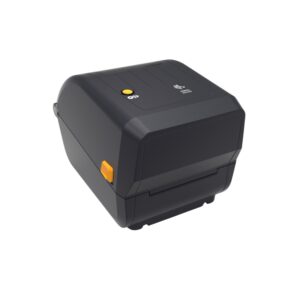
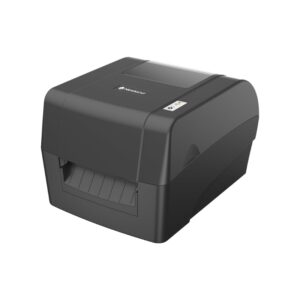
Want to simplify bulk printing with Industrial 4-Inch Label Printers?
Achieve speed, precision, and durability in every labeling task.
Types of Industrial 4-Inch Label Printing Technologies
Direct Thermal Printing
Uses heat-sensitive media without ribbons.
Best suited for:
- Shipping and logistics applications
Limitations:
- Not suitable for harsh environments
Thermal Transfer Printing
Uses ribbons to transfer ink onto labels.
Preferred for:
- Outdoor or industrial conditions
- Chemical or abrasion resistance
Provides higher durability and print stability.
Network and Ethernet Printers
Designed for shared environments where multiple systems require access.
Enables:
- Centralized printing control
- Integration with ERP/WMS systems
- Remote monitoring and management
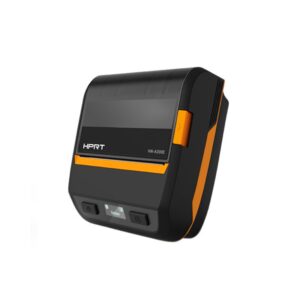
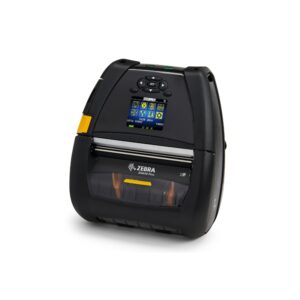
Wireless and Standalone Printers
Used in flexible setups where wiring is not practical.
Typically deployed in:
Key Features of DDAPL Industrial Label Printers
High-Resolution Output
Supports 203 dpi and 300 dpi printing for accurate barcode and QR code generation.
High-Speed Printing
Designed for continuous printing at high speeds while maintaining print quality.
Industrial-Grade Build
Metal construction and robust components for long-term use in demanding environments.
Wide Media Support
Handles 4-inch label rolls across different materials and formats.
Barcode and QR Code Printing
Supports all standard barcode symbologies and 2D codes required for traceability.
Multi-Interface Connectivity
USB, Serial, Ethernet, and optional Wi-Fi for flexible system integration.
ERP and Software Integration
Compatible with inventory systems, WMS, ERP platforms, and custom applications.
Optional Automation Modules
Supports add-ons such as:
- Applicators (in integrated systems)
How Industrial Label Printers Improve Operational Efficiency
In many operations, labeling errors are one of the most common sources of downstream inefficiencies.
Industrial label printers address this by ensuring:
Consistent Barcode Quality
Improves scan success rates and reduces rework.
High-Volume Output Without Downtime
Supports continuous operations without frequent interruptions.
Reduction in Manual Errors
Automated printing reduces dependency on manual labeling processes.
Improved Traceability
Accurate labels enable better tracking across supply chain and production stages.
Integration with Systems
Direct integration with ERP/WMS ensures real-time label generation aligned with transactions.
Industries Using Industrial 4-Inch Label Printers
Warehousing and Logistics
For shipping labels, carton identification, and dispatch tracking.
Manufacturing and Assembly
For product labeling, batch tracking, and process identification.
Pharmaceuticals and Healthcare
For compliance labeling, serialization, and traceability.
Retail and E-Commerce
For product tags, pricing labels, and order fulfillment.
Food and Beverage
For packaging labels, expiry tracking, and regulatory requirements.
Automotive and Industrial
For component identification and supply chain tracking.
DDAPL Approach to Label Printing Solutions
Label printing is not just about generating labels — it directly impacts scanning performance and operational accuracy.
DDAPL evaluates:
- Barcode density and requirements
- Print volume and duty cycle
- Integration with existing systems
Based on this, the printer and configuration are selected to ensure consistent output aligned with operational needs.
Enabling Reliable Data Capture Starts with Print Quality
In most systems, barcode scanning performance depends heavily on how the label is printed.
Poor print quality leads to:
Industrial 4-inch label printers ensure that every label produced is:
- Aligned with system requirements
Ready to Upgrade Your Label Printing Process?
For operations where labeling is critical to tracking, compliance, and automation, selecting the right printer is essential.
DDAPL provides:
- Application-based printer selection
- Bulk deployment capability
- Pan-India supply and service
Get Pricing | Request Demo | Talk to an Expert

 Resolution
 Print Speed
 Print Length
 Bluetooth 4.x/5.0
 Wi-Fi 802.11 a/b/g/n/ac
 USB 2.0
 Ethernet standard
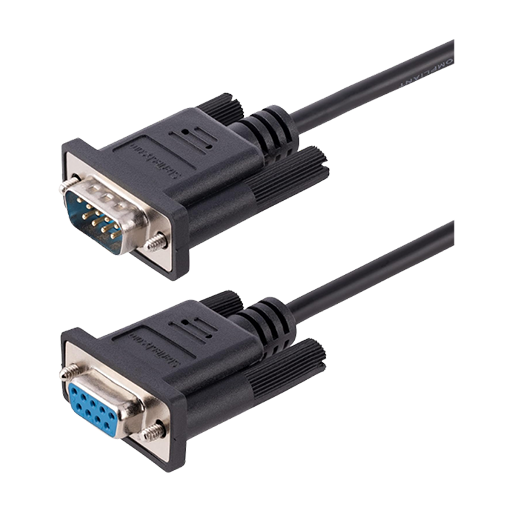 RS-232 Serial