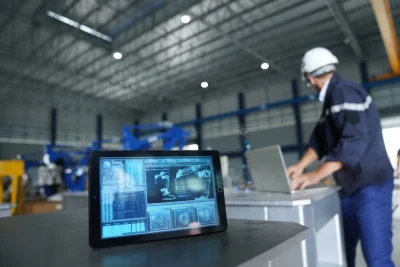

Warehouse operations in India are changing quickly due to rising demand, faster delivery times, and the need for more accurate inventory management. Traditional manual methods are no longer enough to handle today’s fast-moving supply chains.
This is where smart warehouse solutions are playing an important role. They help businesses automate tasks, track things in real time, and improve control over warehouse activities. For Operations Heads, Procurement Heads, and Supply Chain Managers, the focus has now shifted from just storing goods to improving speed, accuracy, and visibility.
This is being done through warehouse automation solutions that minimise errors and enhance efficiency. Such technologies include warehouse management systems, barcode scanning, and RFID.
The demand for warehouse management system and warehouse management software in India is increasing as businesses look for more reliable and scalable solutions. This shift is helping warehouses become more organised, efficient, and ready for future growth.
What Are Smart Warehouse Solutions?
A smart warehouse is not defined by a single technology. It is built on a connected system where inventory, people, processes, and equipment work together through real-time data.
Some of the key elements of smart warehouse solutions include:
- Digital inventory visibility across warehouse locations
- Automated task allocation for faster operations
- Barcode and RFID-enabled tracking
- Real-time monitoring of stock movement
- Data-driven decision-making for warehouse planning
- Integration with business systems such as ERP and logistics platforms
Unlike old warehouses that rely on manual work, smart warehouses organize things so information moves quickly, enabling teams to react faster and work more accurately.
The Role of WMS: The Central System Behind Warehouse Efficiency
One can see WMS as a central system in a warehouse. It interconnects various processes within a warehouse and ensures that all movements are effectively controlled.
A modern warehouse management system in India helps businesses streamline critical operations such as:
| Warehouse Activity | How WMS Adds Value |
| Goods Receiving | Records incoming inventory accurately |
| Put-Away Management | Guides items to the right storage locations |
| Inventory Tracking | Provides real-time stock visibility |
| Order Picking | Improves picking speed and accuracy |
| Dispatch Management | Ensures correct order fulfilment |
| Reporting & Analytics | Supports better operational decisions |
As warehouses grow in size and complexity, investing in reliable warehouse management software in India helps organisations maintain control over inventory while improving productivity across the supply chain.
More importantly, WMS acts as the foundation that allows barcode and RFID technologies to work together seamlessly, creating a truly connected warehouse environment.
How Barcode Technology Improves Accuracy and Speed
Inventory mistakes in a busy warehouse could easily result in delays, incorrect deliveries, and increased operational costs. However, barcode technology offers solutions to all these problems because data entry is done automatically using the scanning process.
Every barcode contains information that can be instantly captured and updated within the warehouse system. This allows warehouse teams to track products at every stage of the process.
Common Areas Where Barcodes Add Value
- Receiving and inward stock verification
- Put-away and location tracking
- Inventory counting and stock audits
- Order picking and packing
- Dispatch validation
Key Benefits for Warehouse Operations
- Faster processing of goods
- Reduced manual errors
- Improved inventory accuracy
- Better traceability of products
- Real-time data updates
When integrated with warehouse automation solutions, barcode systems help create a more structured workflow and ensure that warehouse data remains accurate throughout the day.
How RFID Enables Real-Time Tracking and Automation
As barcodes need to be scanned one by one, RFID (Radio Frequency Identification) goes a step further by automatically identifying products via radio waves.
This capability makes RFID especially useful in warehouses that handle large volumes of inventory and require faster movement of goods.
How RFID Improves Warehouse Operations
| Traditional Tracking | RFID-Based Tracking |
| Requires line-of-sight scanning | Can read tags without direct visibility |
| One item scanned at a time | Multiple items can be detected simultaneously |
| More manual involvement | Greater automation in tracking |
| Slower inventory checks | Faster stock verification |
Business Advantages of RFID
- Real-time inventory visibility
- Faster stock movement tracking
- Improved inventory accuracy
- Better asset traceability
- Reduced operational bottlenecks
As the adoption of warehouse automation in India continues to grow, RFID is becoming an important technology for businesses looking to improve visibility and gain better control over warehouse operations. Its ability to provide instant tracking information makes it a valuable component of modern automated warehouses.
How WMS, Barcode, and RFID Work Together for Real-Time Operations
The real advantage of modern warehousing comes when WMS, barcode technology, and RFID are connected into a single ecosystem. Instead of operating as separate tools, they continuously share information, creating a smooth and transparent flow of data across the warehouse.
A Typical Workflow in an Integrated Warehouse
Step 1: Goods Receipt
- Incoming products are identified using barcode or RFID tags.
- The WMS records the inventory and updates stock levels in real time.
Step 2: Storage and Put-Away
- The system directs items to designated storage locations.
- Warehouse movements captured through barcode or RFID scanning are automatically updated within the WMS.
Step 3: Inventory Monitoring
- Stock levels remain visible in real time.
- Warehouse teams can quickly locate products and track movements.
Step 4: Order Fulfilment
- WMS generates picking instructions.
- Barcode or RFID verification ensures the correct items are picked and packed.
Step 5: Dispatch
- Final validation takes place before shipment.
- Inventory records are updated immediately after dispatch.
This integration is what makes smart warehouse solutions truly effective. By using accurate data, automation, and real-time updates, businesses can better manage warehouse operations with more confidence and control.
Key Business Benefits of an Integrated Warehouse System
In order to make a difference for warehouse managers, technology implementation must yield measurable results. A combined use of WMS, barcode scanning, and RFID provides just that.
- Improved Inventory Accuracy
Real-time tracking reduces stock discrepancies and provides greater confidence in inventory records.
- Faster Warehouse Operations
Automated data capture minimises manual effort and speeds up receiving, picking, packing, and dispatch processes.
- Better Resource Utilisation
Warehouse teams spend less time searching for inventory and more time on productive tasks.
- Greater Operational Visibility
Managers gain access to real-time information, enabling quicker, more informed decision-making.
- Scalability for Future Growth
As orders increase, such an integration system will be able to handle more load with reduced complexity.
For organisations using warehouse automation solutions, there will be improved supply chain management, reduced costs, and greater agility in warehouse operations.
Conclusion: Future of Warehouse Automation in India
With supply chains becoming faster and more complex, warehouses cannot afford to rely on manual, separate systems. Visibility, accurate inventory information, and efficiency are essential for companies to remain competitive in their business areas. Therefore, the growing popularity of warehouse automation in India is unsurprising.
By integrating WMS, barcoding, and RFID, companies can build a connected warehouse environment where each step is recorded, each process is optimised, and every decision is made using real-time information.
At DD Automation, we help businesses implement smart warehouse solutions that combine advanced technology with practical operational requirements. Our expertise in warehouse management systems in India enables organisations to build efficient, scalable, and future-ready warehouses that support long-term growth.
If you want to improve inventory visibility, cut inefficiencies, and boost warehouse performance, now is a good time to invest in automation. Contact us today to discover how our warehouse management software in India can transform your warehouse operations.