Factories and warehouses in India are changing quickly. Earlier, most operations depended on manual registers, paper records, and human checks. Today, companies want faster systems that give accurate information in real time.
This is where industrial automation solutions are becoming important. These systems bring barcode, RFID, and IoT together into one connected setup. When they work together, businesses can track materials, files, and assets without delays or confusion.
At Digital Data Automation Pvt Ltd, we help organizations move from manual processes to simple and connected digital systems. As an industrial automation company in India, our focus is to improve visibility, reduce manual work, and support smoother operations.
Why Are Industries Moving Towards Connected Systems?
Industrial operations involve a lot of movement every day. Goods come in, move through production, and go out for delivery. Along with this, machines and documents also need tracking.
When everything is handled manually, problems start to appear:
- Data mismatches
- Delayed reporting
- Missing items or files
- High dependency on manual checks
- Slow decision-making
Because of these issues, companies are now moving towards industrial IoT solutions and automated systems that provide real-time updates.
Connected systems help businesses:
- See operations clearly at every stage
- Reduce manual dependency
- Improve tracking accuracy
- Speed up daily processes
- Support better planning and control
This shift is not just about technology. It is about making operations simpler and more reliable.
Understanding Barcode Systems in Simple Terms
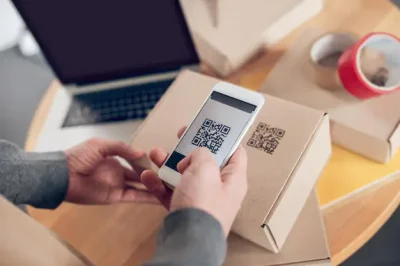
Barcode systems are one of the oldest and most widely used tracking tools in industries. They work by assigning a unique code to each item, which can be scanned using a reader.
These systems are commonly used in:
- Warehouse inventory tracking
- Product identification
- Dispatch management
- Asset tagging
- File and document labelling
Benefits of barcode systems
- Low installation cost
- Easy to understand and use
- Fast scanning process
- Reduces manual entry errors
However, barcode systems have one limitation. They require direct scanning. This means each item must be visible and scanned one by one, which takes time in large operations.
How RFID Improves Tracking and Control
RFID is a more advanced tracking method. It uses radio waves to identify items without needing direct scanning. This makes it faster and more flexible compared to barcodes.
A RFID file tracking system is especially useful in organisations that handle large volumes of documents and records.
RFID is commonly used for:
- File tracking in offices
- Asset movement tracking
- Inventory control in warehouses
- Tool management in factories
- Equipment monitoring
Key benefits of RFID
- No need for direct scanning
- Multiple items can be read at once
- Faster tracking process
- Better accuracy
- Reduced chances of loss or misplacement
- Real-time visibility of movement
Because of these advantages, RFID is widely used in modern industrial automation solutions, especially in large-scale operations.
Barcode Vs RFID: Simple Comparison
| Feature | Barcode | RFID |
| Scanning method | Requires direct line-of-sight | No line-of-sight needed |
| Speed | Medium | Fast |
| Multiple item reading | Not possible | Possible |
| Accuracy | Good | Very high |
| Cost | Low | Higher initial cost |
| Automation level | Basic | Advanced |
| Large-scale efficiency | Limited | Strong |
Most companies today use a combination of both systems instead of choosing only one.
What is the Role of Industrial IoT Solutions?
IoT (Internet of Things) connects machines, devices, and systems so they can share data automatically. In industries, this means real-time communication between equipment, sensors, and software systems.
Industrial IoT solutions help businesses:
- Monitor machines remotely
- Track production in real time
- Control energy usage
- Improve warehouse flow
- Detect machine issues early
- Collect and analyse live data
IoT acts as the central layer that brings barcode and RFID data together. It converts raw tracking data into useful information that managers can understand easily.
How Barcode, RFID, And IoT Work Together?
The real strength of automation comes when all three technologies are connected.
Here is a simple example of how they work together:
- Barcode labels are placed on raw materials
- RFID tags track movement of pallets and equipment
- IoT sensors monitor machine performance and environment
- All data flows into one central system
- Managers view everything on a live dashboard
This setup reduces confusion and improves overall control of operations.
With integrated industrial automation solutions, companies do not need to depend on multiple separate systems. Everything works together in one flow.
Why RFID Is Important for File Tracking Systems?
File management is often ignored in industrial automation, but it is very important. Many companies still struggle with missing or misplaced documents.
A RFID file tracking system solves this problem by improving visibility and control.
Benefits include:
- Real-time file location tracking
- Faster document retrieval
- Reduced file loss
- Complete movement history
- Better audit support
- Improved employee efficiency
When combined with IoT, the system can even send alerts if a file is taken outside a permitted area or stays inactive for too long.
This is especially useful for:
- Manufacturing companies
- Government departments
- Hospitals
- Banks and financial institutions
- Legal offices
- Large corporate organisations
Benefits Of Integrated Automation Systems
When barcode, RFID, and IoT systems work together, businesses see strong improvements across operations.
- Better visibility: Managers can see what is happening at any point in time.
- Improved productivity: Employees spend less time searching for items or files.
- Fewer errors: Automation reduces manual mistakes.
- Faster decisions: Real-time data helps managers act quickly.
- Lower operational cost: Better efficiency reduces waste and delays.
- Strong control and tracking: Every movement is recorded and traceable.
These benefits show why industrial automation solutions are becoming essential for modern industries.
What Should Companies Consider Before Implementation?
Before adopting automation systems, companies should plan properly.
- Current infrastructure
Existing systems must be reviewed for compatibility.
- Business requirements
Clear goals help choose the right combination of barcode, RFID, and IoT.
- Scalability
Systems should support future expansion without major changes.
- Employee training
Staff must understand how to use the system properly.
- Data security
Connected systems must be protected from risks.
- System integration
The solution should connect smoothly with ERP and warehouse software.
An experienced industrial automation company in India can help businesses design and implement the right solution based on their needs.
Industries Using Industrial IoT and Automation Today
Industrial IoT solutions are now used across many sectors in India:
- Manufacturing
- Automotive
- Pharmaceuticals
- Logistics and supply chain
- Warehousing and distribution
- Healthcare
- Retail and e-commerce
- Government organisations
- Education and research institutions
Each industry uses automation differently, but the main goal remains the same—better control, accuracy, and visibility.
Creating Smarter Industrial Operations for the Future
Industrial operations are becoming more connected every year. Separate systems are slowly being replaced by integrated platforms.
Barcode systems provide basic identification. RFID adds speed and automation. IoT brings intelligence and real-time data.
When combined, they form powerful industrial automation solutions that help businesses reduce manual work, improve accuracy, and manage operations more efficiently.
At DD Automation, we design practical automation systems that fit real business needs. As a trusted industrial automation company in India, we focus on improving visibility, reducing operational gaps, and helping companies move towards smarter workflows.
If your organisation is planning to improve tracking, inventory, or document management, we are ready to support you with the right solution.
Contact us today to discuss how we can help you build a more connected and efficient industrial system.