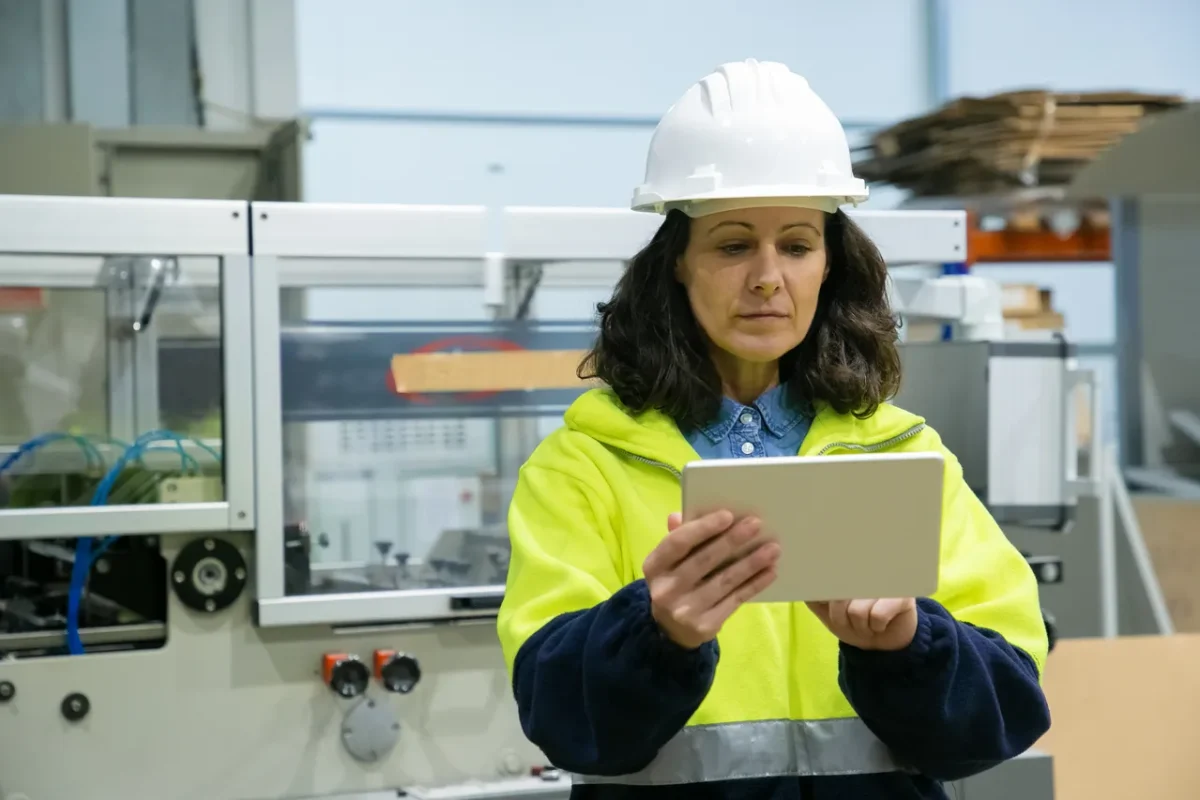
Manufacturing businesses need technology that works within real production environments, not technology that exists separately from day-to-day operations. Understanding machines, production workflows, quality requirements, material movement, downtime, and operator processes is essential when implementing digital solutions.
This is why manufacturing and technology expertise can provide greater practical value than technology expertise alone. A technology solution may have strong technical capabilities, but its effectiveness depends on how well it fits the manufacturing process.
For manufacturers adopting automation, connected systems, and digital technologies, this combination of domain knowledge and technical expertise can improve implementation, integration, and long-term usability.
Why Is Manufacturing Expertise Important When Implementing Technology?
Manufacturing expertise helps technology providers understand how production processes actually work and where technology can create measurable operational value. It provides context that cannot always be gained from technical specifications alone.
A manufacturing environment may involve:
- Production planning
- Machines and equipment
- Raw materials
- Work-in-progress inventory
- Quality inspection
- Operators
- Maintenance activities
- Material movement
- Production targets
- Downtime management
A technically capable solution may collect machine data, for example, but manufacturing knowledge is needed to understand what that data means in the context of production.
The objective should therefore be to identify the operational problem first and then determine which technology can address it.
What Is the Difference Between Technology Expertise and Manufacturing Technology Expertise?
Technology expertise focuses on selecting, developing, integrating, and maintaining technical systems, while manufacturing technology expertise combines these capabilities with an understanding of production processes and industrial operations.
| Technology Expertise | Manufacturing + Technology Expertise |
| Focuses on technical capabilities | Connects technical capabilities with production requirements |
| Understands software and systems | Understands software alongside manufacturing workflows |
| Focuses on system functionality | Focuses on operational outcomes |
| May work across many industries | Applies technology to manufacturing-specific challenges |
| Prioritises technical implementation | Balances technical and production requirements |
| Measures system performance | Connects system performance with production performance |
Neither approach is inherently better for every project. However, manufacturing applications often require both technical capability and domain understanding.
How Does Manufacturing Knowledge Improve Industrial Automation?
Manufacturing knowledge helps ensure that automation is designed around actual production workflows rather than technology being implemented as an isolated system. This can make automation more practical and easier to integrate into existing operations.
For example, automating a machine-loading process requires more than controlling a robotic or automated system. The implementation may need to consider:
- Machine cycle times
- Material availability
- Operator interaction
- Safety procedures
- Product variants
- Production schedules
- Quality checks
- Machine status
Industrial Automation Software can connect machines, controls, sensors, and production workflows. However, understanding the manufacturing process helps determine what should be automated, what data needs to be captured, and how the automation should interact with other operations.
This combination can help manufacturers avoid implementing technology that works technically but creates problems within the production workflow.
Why Is Industry Context Important for Industrial IoT?
Industrial IoT becomes more useful when machine and equipment data is connected to specific manufacturing requirements and business objectives. Simply collecting large amounts of data does not automatically improve production.
A connected manufacturing environment may generate information about:
- Machine operating status
- Cycle time
- Downtime
- Production quantity
- Equipment alarms
- Energy consumption
- Process parameters
- Maintenance conditions
Industrial IoT Software can collect and organise this information from connected equipment. Manufacturing knowledge is then important for determining which data matters and how it should be interpreted.
For example, a change in machine cycle time may indicate a production issue, but its significance depends on the process, product, machine, and expected operating conditions.
This is where domain expertise helps turn machine data into useful operational information.
How Does Manufacturing Automation Software Support Production?
Manufacturing Automation Software connects production processes, machines, data, and operational workflows to create a more structured automation environment. It can support manufacturers in coordinating automated activities while maintaining visibility into production processes.
Depending on the implementation, the software may connect with:
- PLCs
- Machines
- Sensors
- Barcode scanners
- RFID systems
- HMIs
- Production databases
- ERP systems
- Industrial IoT platforms
For example, a production workflow may require a machine to process a component only after the correct material has been identified and the required production conditions have been confirmed.
Technology can provide the communication and control mechanisms, while manufacturing knowledge helps define the correct workflow.
This makes Manufacturing Automation Software more effective when it is developed around the actual production environment.
What Happens When Technology Is Implemented Without Manufacturing Knowledge?
Technology implemented without sufficient manufacturing context can solve a technical problem without addressing the underlying operational requirement. This can result in poor adoption, unnecessary complexity, or limited return on investment.
Common problems may include:
- Automating the wrong process
- Collecting data that is not operationally useful
- Creating disconnected systems
- Ignoring operator workflows
- Underestimating production variability
- Making systems difficult to use
- Creating unnecessary manual work
- Failing to integrate with existing equipment
For example, a dashboard may display hundreds of machine parameters but provide little value if production teams cannot identify which information requires action.
Manufacturing expertise helps prioritise the information and workflows that matter.
How Does Manufacturing Expertise Improve Technology Integration?
Manufacturing expertise improves technology integration by ensuring that new systems fit existing machines, processes, people, and operational systems. Production environments rarely operate through one technology platform.
A manufacturing facility may already use:
- ERP software
- PLC-based controls
- Machines from different manufacturers
- Barcode systems
- RFID technology
- Quality systems
- Production databases
- Maintenance systems
A new digital solution needs to work within this existing environment.
For example, Industrial Automation Software may need to exchange information between machines and business systems. Understanding how production data is generated and consumed can make integration decisions more practical.
The focus should be on creating a connected workflow rather than simply connecting individual technologies.
Why Is Industry 4.0 More Than Installing New Technology?
Industry 4.0 is a broader approach to connected and data-driven manufacturing, where machines, software, people, and operational systems work together to improve visibility and decision-making. It is not simply the installation of sensors or new software.
Industry 4.0 initiatives can include:
- Industrial IoT connectivity
- Machine data collection
- Production monitoring
- Digital traceability
- Predictive maintenance
- Automated reporting
- Data analytics
- Connected quality processes
- Production workflow integration
Industry 4.0 Software can provide part of the digital infrastructure required for these initiatives. However, successful implementation also requires an understanding of how the factory operates.
A manufacturer should therefore define the operational objective before selecting the technology.
How Can Technology Solve Real Manufacturing Problems?
Technology creates the most value when it is applied to a clearly defined manufacturing problem with measurable operational objectives. Instead of starting with a technology and searching for a use case, manufacturers can begin with the production challenge.
For example:
Problem: Unplanned machine downtime is affecting production schedules.
Manufacturing requirement: Identify machine conditions and downtime events more quickly.
Technology approach: Connect machines and collect relevant operating data.
Expected outcome: Improve visibility into downtime and support faster investigation.
This problem-first approach helps prevent technology projects from becoming disconnected from production priorities.
What Skills Should a Manufacturing Technology Partner Have?
A strong manufacturing technology partner should combine software and automation expertise with an understanding of industrial processes, equipment, production workflows, and implementation requirements.
Important capabilities include:
- Understanding manufacturing workflows
- Industrial automation knowledge
- Software development and integration
- Machine connectivity
- Data collection
- Industrial communication
- Barcode and RFID integration
- ERP integration
- Industrial IoT
- Production monitoring
- Implementation and support
This combination allows technical teams to communicate more effectively with production, engineering, maintenance, and management teams.
It also helps ensure that the proposed solution can work within the practical constraints of the factory.
How Does DD Automation Combine Manufacturing and Technology Expertise?
DD Automation combines software, industrial automation, and manufacturing-oriented technology capabilities to help businesses connect operational processes with digital systems. The focus is on solving practical workflow and data challenges rather than introducing technology in isolation.
Its approach can involve Industrial Automation Software, machine connectivity, data capture, and integration with existing operational systems.
For manufacturers exploring connected operations, Industrial IoT Software can help provide visibility into machine and equipment data. These capabilities can also support broader digital transformation initiatives.
The objective is to create technology solutions that fit the manufacturing environment and support measurable operational requirements.
Why Does Manufacturing and Technology Expertise Matter for Long-Term Digital Transformation?
Manufacturing and technology expertise matters because digital transformation is an ongoing operational process rather than a one-time technology installation. As production requirements change, systems need to adapt to new products, machines, workflows, and business objectives.
A technology partner that understands manufacturing can help businesses evaluate how new technologies fit into their existing environment.
This may include:
- Connecting additional machines
- Expanding production monitoring
- Improving traceability
- Adding new data sources
- Integrating business systems
- Supporting new production workflows
- Developing Industry 4.0 initiatives
With the right foundation, Industry 4.0 Software can become part of a wider connected manufacturing strategy rather than operating as an isolated digital platform.
FAQs About Manufacturing and Technology Expertise
Why is manufacturing expertise important in technology projects?
Manufacturing expertise helps technology teams understand production workflows, machine requirements, operator processes, quality needs, and operational constraints. This allows technology to be designed around real manufacturing requirements.
Is technology expertise alone enough for manufacturing automation?
Not always. Technical expertise is essential, but manufacturing projects also require an understanding of production processes, equipment, workflows, and operational objectives.
What role does Industrial Automation Software play in manufacturing?
Industrial Automation Software can connect machines, controls, sensors, and production workflows. It can support automation, monitoring, data collection, and integration depending on the implementation.
How does Industrial IoT Software help manufacturers?
Industrial IoT Software can collect and organise data from connected machines, sensors, and equipment. This data can support machine monitoring, production visibility, analysis, and operational decision-making.
What is the role of Manufacturing Automation Software?
Manufacturing Automation Software helps connect automation technologies with production processes and workflows. It can support coordinated machine operations, data capture, and integration with other manufacturing systems.
How does Industry 4.0 Software support digital manufacturing?
Industry 4.0 Software can help connect machines, sensors, software, and production data to create a more connected manufacturing environment. It can support monitoring, traceability, analytics, and data-driven operations.