
Modern manufacturing depends on connected machines, sensors, controllers, software, and people. Production data needs to move reliably and, where required, with low latency between shop-floor systems and business applications. If these systems cannot communicate properly, manufacturers may face data gaps, slow reporting, and limited production visibility.
This is where industrial networking solutions become important. They connect industrial devices and systems so that operational data can move reliably across a facility. When integrated with industrial IoT solutions, industrial automation software, and Industry 4.0 software, industrial networking can support connected and data-driven manufacturing.
For manufacturers looking to improve automation and real-time visibility, understanding how industrial networks work is an important first step.
What are industrial networking solutions?
Industrial networking solutions are communication systems designed to connect machines, sensors, controllers, software, and other devices used in industrial environments.
Compared with many office networks, industrial networks often need to support continuous or highly available operations and industrial communication requirements. It may also need to work in environments with heat, dust, vibration, electrical interference, and other challenging conditions.
An industrial network may connect:
- Programmable Logic Controllers (PLCs)
- Sensors and actuators
- Human-Machine Interfaces (HMIs)
- SCADA systems
- Industrial PCs
- CNC machines
- Industrial gateways
- RFID and barcode systems
- Production monitoring applications
The network’s role is to provide reliable connectivity so operational data can be exchanged between the required devices, systems, and applications according to their communication requirements.
Why is industrial networking important for smart manufacturing?
Smart manufacturing depends on continuous data exchange. Machines generate information, sensors collect it, software processes it, and managers use it to make decisions.
Without reliable connectivity, manufacturers may face disconnected systems, incomplete data exchange, and greater reliance on manual data collection.
A strong industrial network can help businesses improve:
- Real-time machine visibility
- Production monitoring
- Data collection
- Equipment communication
- System integration
- Material tracking
- Maintenance planning
- Operational decision-making
It also provides the foundation for connected manufacturing. As more machines and devices become digital, the need for reliable industrial networking solutions increases.
How do industrial networks work?
An industrial network connects different levels of a manufacturing environment. Each level performs a specific function.
A simple data flow can look like:
Machine → Sensor → PLC → Industrial Network → Gateway → Software → Business System
The network allows information to move between these layers.
| Network Level | Main Purpose | Common Examples |
| Field Level | Collect machine data | Sensors, actuators |
| Control Level | Control processes | PLCs, controllers |
| Supervisory Level | Monitor operations | SCADA, HMI |
| Application Level | Process operational data | Industrial automation software |
| Enterprise Level | Support business decisions | ERP, analytics |
The exact architecture depends on the facility, machines, applications, and production requirements.
What are the main components of industrial networking solutions?
A complete network may include several hardware and software components.
- Industrial Ethernet
Industrial Ethernet supports fast and reliable communication between machines, controllers, computers, and other devices. It is commonly used where stable connectivity is important.
- Industrial Switches
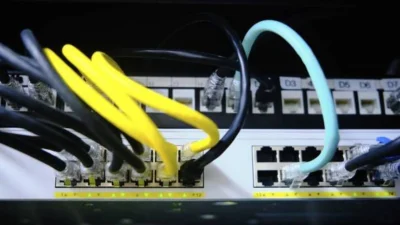
Switches connect multiple devices within the network. Industrial-grade switches are designed for demanding manufacturing environments.
- Industrial Gateways
Gateways allow devices using different protocols or communication methods to exchange information. They can also help connect older machines with newer digital systems.
- Wireless Networks
Wireless connectivity can support mobile equipment, warehouses, handheld devices, asset tracking, and areas where cabling is difficult.
- Network Monitoring
Monitoring tools help teams check network performance, device status, and connectivity. This can speed up troubleshooting and reduce unexpected interruptions.
How do industrial ioT solutions use industrial networks?
Industrial IoT solutions connect physical machines and equipment with digital systems. Sensors collect information such as temperature, vibration, pressure, speed, energy consumption, and machine status.
The network then transfers this information to gateways, applications, or analytics platforms.
For example, a sensor may detect unusual vibration in a machine. The data can travel through the industrial network to an application. The maintenance team can then review the information and investigate the issue.
This creates a simple flow:
Capture → Connect → Analyse → Act
Without dependable connectivity, industrial IoT solutions may not deliver reliable real-time information. Networking is therefore a key part of any connected manufacturing strategy.
What role does industrial automation software play?
The network provides the communication path, while industrial automation software helps turn machine data into useful information.
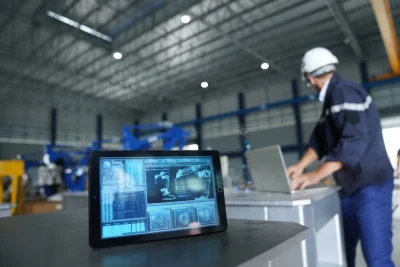
Depending on the application, the software can support production monitoring, machine monitoring, WIP tracking, traceability, maintenance, and operational reporting.
For example, when machines connect to industrial automation software, production teams get a clearer view of machine status and production activity. This can reduce dependence on manual reporting and help teams respond faster to operational issues.
The value comes from connecting machines, networks, and software instead of treating each system as a separate solution.
How does industry 4.0 software support connected manufacturing?
Industry 4.0 software supports data-driven manufacturing by connecting information from machines, processes, assets, and operational systems.
However, software needs reliable data to provide useful insights. This is why Industry 4.0 software and industrial networking solutions work closely together.
A connected manufacturing setup can follow this process:
- Sensors collect operational data.
- Networks transfer the data.
- Gateways connect devices and systems.
- Industry 4.0 software processes the information.
- Dashboards display useful insights.
- Teams use the information to improve operations.
This approach can help manufacturers move towards better visibility and more informed decision-making.
What should manufacturers consider before choosing a network?
Selecting industrial networking solutions should start with business and operational requirements. The technology should support the actual manufacturing environment.
Manufacturers should consider:
- Existing equipment: Check machines, PLCs, sensors, and current communication systems.
- Protocols: Identify the communication protocols used by existing equipment.
- Environment: Consider heat, dust, moisture, vibration, and electrical interference.
- Data volume: Understand how much data needs to be transferred.
- Scalability: Plan for additional machines, sensors, and production lines.
- Security: Include access controls, segmentation, monitoring, and other suitable security measures.
- IT-OT integration: Plan how shop-floor systems will communicate with business applications.
- Maintenance: Ensure the network can be monitored and maintained easily.
Planning these factors early can help prevent connectivity issues as the facility expands.
What are the benefits of industrial networking solutions?
A well-designed industrial network can support several manufacturing goals.
- Better Production Visibility
Connected machines can provide timely information about production activity and machine conditions.
- Faster Data Collection
Automated data transfer can reduce the need for manual collection and reporting.
- Easier System Integration
Networks can connect shop-floor equipment with monitoring platforms, industrial automation software, and enterprise systems.
- Improved Traceability
Connected barcode, RFID, and tracking systems can help businesses monitor materials, products, and assets.
- Support For Predictive Maintenance
Continuous machine data can help teams identify unusual conditions and investigate potential equipment problems earlier.
- Better Scalability
A well-planned network makes it easier to add new machines, sensors, and applications.
Building a connected manufacturing environment
Smart manufacturing requires multiple technologies to work together. Machines and sensors generate data. Industrial networking solutions move that data. Industrial IoT solutions connect physical operations with digital systems. Industrial automation software helps teams monitor and manage processes, while Industry 4.0 software supports broader digital manufacturing goals.
At Digital Data Automation Pvt Ltd, we help businesses build connected industrial environments based on their operational requirements. Our approach brings together automation, networking, IoT, tracking, and software capabilities to support real-time visibility and more connected manufacturing processes.
If your business is planning a connected factory, upgrading its industrial network, or integrating industrial IoT solutions with existing operations, contact us to discuss your requirements and find the right solution for your facility.