As factories evolve into intelligent, connected ecosystems, one foundational layer determines whether operations run smoothly—or grind to a halt: the industrial networking infrastructure beneath it all.
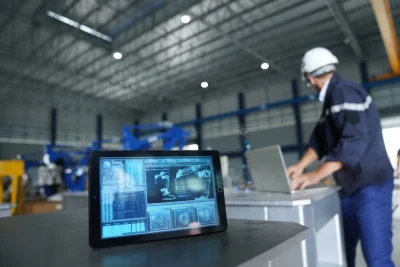
Walk onto a modern manufacturing floor and you’ll see robotic arms, conveyor systems, CNC machines, and vision inspection systems. But the real engine of productivity isn’t visible—it’s the continuous flow of data across industrial communication networks, linking machines, sensors, and controllers in real time.
Consider a high-speed bottling plant: hundreds of bottles moving every minute, with tightly synchronized filling, capping, and inspection systems. A delay of even 100 milliseconds between sensors and actuators can result in spillage, rejected products, or a complete line stoppage. This is where industrial Ethernet solutions play a critical role—ensuring every action happens in precise lockstep.
What Is Industrial Ethernet?
Industrial Ethernet builds on standard Ethernet technologies like IEEE 802.3, TCP/IP, and RJ45 connectors—but it is purpose-built for real-time industrial communication systems.
In industrial networks, correctness is not enough—timing defines success.
Unlike traditional IT networks, Ethernet for manufacturing must deliver deterministic performance, low latency, and high reliability—even in harsh environments with electrical noise, vibration, and extreme temperatures.
This is what differentiates industrial networking solutions from standard office networking—they are designed not just for connectivity, but for predictable and continuous operation.
Why Modern Manufacturing Depends on Industrial Ethernet Solutions
Deterministic Control and Low-Latency Networking
Protocols such as PROFINET IRT and EtherCAT enable low latency networking with sub-millisecond cycle times and ultra-low jitter. This allows precise synchronization across robotics, PLC communication, and motion control systems.
Built for Harsh Industrial Environments
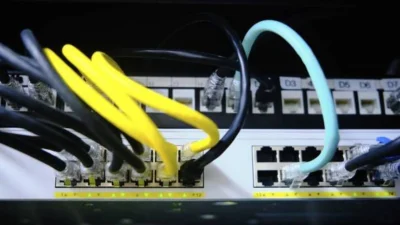
Industrial Ethernet components, including industrial switches and rugged cabling, are designed to operate reliably under extreme temperatures, vibration, and EMI interference, ensuring uninterrupted industrial communication networks.
Network Redundancy and High Availability
Modern industrial network architecture for factories includes redundancy mechanisms like ring topologies using RSTP and MRP. These ensure rapid recovery from failures, minimizing costly downtime.
Integrated Industrial Cybersecurity
Advanced industrial networking solutions incorporate VLAN-based network segmentation, 802.1X authentication, and IEC 62443 standards to protect SCADA systems, PLCs, and other critical assets from cyber threats.
IIoT and Edge Computing Enablement
Industrial Ethernet enables seamless integration of IIoT devices and edge computing platforms, supporting data-driven use cases such as predictive maintenance and real-time quality monitoring.
Bridging OT and IT Systems
One of the key benefits of industrial Ethernet in smart factories is enabling OT/IT convergence. It allows seamless data exchange between PLCs, SCADA systems, enterprise IT platforms, and cloud environments—without complex protocol conversions.
The Shift Toward Time-Sensitive Networking (TSN)
A major advancement in industrial communication networks is the adoption of Time-Sensitive Networking (TSN).
TSN enhances standard Ethernet by enabling deterministic networking through time synchronization and traffic scheduling. This allows multiple traffic types—control, safety, and data—to coexist on a single network without interference.
For manufacturers, this simplifies industrial network architecture by eliminating the need for multiple parallel networks, while still maintaining strict performance guarantees.
Technologies like OPC UA over TSN are rapidly becoming the standard for real-time industrial communication systems across multi-vendor environments.
How Industrial Ethernet Adoption Typically Unfolds
Network Assessment
Organizations evaluate existing infrastructure, identifying gaps in industrial communication networks, latency-sensitive operations, and environmental risks.
Protocol Selection
Choosing the right protocol is key to building effective industrial networking solutions, especially when integrating PLC communication and motion control systems.
Infrastructure Deployment
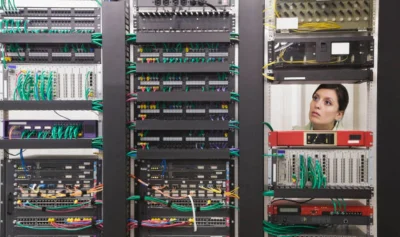
Deployment involves installing industrial-grade switches, structured cabling, and VLAN configurations to enable network segmentation and reliable performance.
OT/IT Integration
Secure architectures, including DMZs, connect industrial networks with enterprise systems, enabling data flow across the organization.
Monitoring and Optimization
Continuous monitoring tools help maintain low latency networking, detect anomalies, and ensure long-term network performance and security.
What Separates Robust Industrial Networks from Fragile Ones
The success of industrial Ethernet solutions depends on disciplined implementation.
Physical Layer Integrity
Reliable performance starts with high-quality cabling, shielding, and grounding—critical for maintaining stable industrial communication networks.
Effective Network Segmentation
Proper network segmentation ensures that time-sensitive control traffic is isolated from bandwidth-heavy applications, preventing latency issues.
Right-Sized Redundancy
Well-designed industrial network architecture for factories includes redundancy strategies aligned with the true cost of downtime.
What’s Next for Industrial Networking Solutions?
The future of industrial networking solutions is being shaped by emerging technologies.
Single Pair Ethernet (SPE) is simplifying connectivity by enabling data and power over a single cable, especially useful for edge devices in industrial communication networks.
At the same time, private 5G networks are enhancing mobility, supporting applications like autonomous guided vehicles and mobile robotics.
Together, these technologies are redefining industrial network architecture, combining deterministic wired networks with flexible wireless connectivity.
The Network Is Now a Competitive Advantage
Modern industrial Ethernet solutions are no longer optional—they are foundational to competitive manufacturing.
Manufacturers leveraging advanced industrial networking solutions can:
- Enable predictive maintenance
- Achieve real-time production optimization
- Improve product quality
- Enhance operational agility
Those relying on outdated infrastructure risk inefficiencies, downtime, and lost competitiveness.
And just like in a high-speed bottling plant—where every millisecond matters—the difference between success and failure comes down to one thing:
a network that delivers not just data, but certainty.