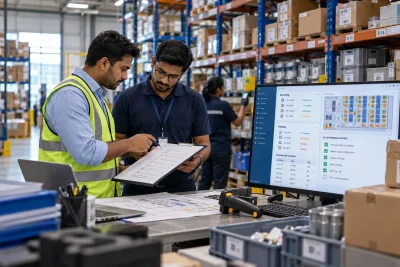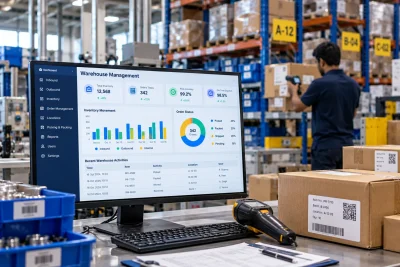
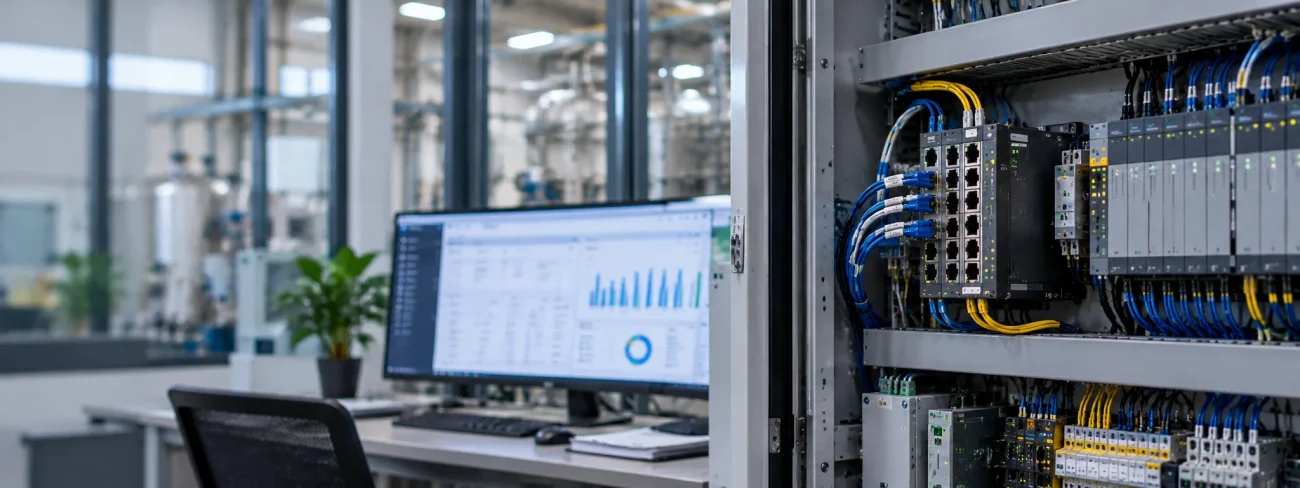
Manufacturing plants generate large amounts of data every day. Machines record production cycles, downtime, quality parameters, energy use, and equipment conditions, while business teams work with production plans, inventory, procurement, and supply chain information.
When these environments operate separately, useful information can remain within individual systems. IT/OT convergence connects Information Technology (IT) with Operational Technology (OT), allowing shop-floor data to support wider business processes and decisions.
At DD Automation, we focus on connecting automation, data, and software to support more connected manufacturing environments. This approach can help manufacturers improve visibility while building a practical foundation for digital operations.
What do IT and OT mean in manufacturing?
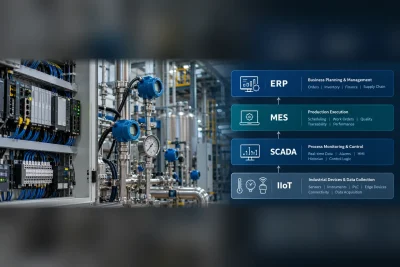
IT generally supports business applications, data management, communication, reporting, and enterprise processes. ERP systems, databases, business applications, and corporate networks are common examples.
OT works closer to the physical production process. PLCs, sensors, machines, controllers, and industrial monitoring systems are part of this environment.
Traditionally, IT and OT operated as separate layers. IT focused on business information, while OT focused on controlling and monitoring production. Convergence creates stronger communication between these layers so operational information can reach the systems and teams that need it.
Why are manufacturers moving towards IT/OT convergence?
Production teams need timely information to manage machines, output, quality, and downtime. Business teams also need accurate production information for planning, inventory, purchasing, and delivery decisions.
Industrial IoT Solutions can help capture information from connected machines, sensors, and other devices. When this data is made available to relevant software and business systems, teams can work with more current operational information instead of relying only on manual reports.
The goal is not simply to connect more devices. It is to make useful production data available at the right point in the decision-making process.
What changes when shop-floor data meets business systems?
IT/OT convergence can change how manufacturing data is collected, shared, and used across an organisation.
- Production data becomes more accessible
Machine information does not have to remain limited to local operator screens. Connected systems can make relevant production information available to supervisors, maintenance teams, plant managers, and other authorised users.
This can create a more consistent view of production activity and reduce delays caused by manual data collection.
- Decisions can become more data-driven
A production delay can affect material planning, inventory, schedules, and delivery commitments. When operational information reaches business systems, teams can understand these wider effects instead of treating a machine issue as an isolated event.
- Manual data entry can reduce
Manual data entry requires additional time and can introduce errors when information is copied between systems. Industrial automation software can help collect and organise data from connected equipment and present it through dashboards, reports, alerts, or workflows.
How does IT/OT convergence improve production visibility?
Better visibility starts with collecting relevant information from the production environment. Depending on the application, this may include:
- Machine status and operating conditions
- Production output and cycle information
- Downtime and stoppage records
- Quality and process parameters
- Material and WIP movement
- Maintenance information
- Energy consumption
- Product and process traceability
Manufacturers do not need to collect every possible data point. The focus should be on information that supports specific production, quality, maintenance, or business objectives.
What role does manufacturing automation software play?
Collecting machine data is only one part of the process. Manufacturing automation software can help organise operational information and connect it with production workflows, monitoring systems, and other applications.
For example, production data can be used to monitor output, identify downtime patterns, track process performance, and generate alerts. When this information is connected with wider business processes, teams can use the same operational data for planning and reporting.
This creates a useful link between raw machine data and practical business decisions.
Can IT/OT convergence support predictive maintenance?
Connected operational data can support a more proactive maintenance approach. Machines and sensors can provide information about operating conditions, alarms, temperature, vibration, and other performance parameters.
When this information is monitored over time, maintenance teams can identify unusual patterns and investigate possible issues earlier. It does not mean every failure can be predicted, but better data can help reduce dependence on purely reactive maintenance.
How does IT/OT convergence support industry 4.0?
Industry 4.0 depends on connected machines, automation, data exchange, analytics, and digital workflows. IT/OT convergence supports this model by allowing information to move between physical production processes and digital systems.
Industry 4.0 software can support applications such as production monitoring, traceability, predictive maintenance, dashboards, analytics, and automated reporting. However, software alone cannot create a connected factory. Machines, sensors, networks, data architecture, and business systems also need to work together.
A typical flow can look like this:
Machines → Sensors → Connectivity → Data Platform → Software → Business Systems → Decisions
What challenges should manufacturers consider?
Connecting IT and OT environments requires careful planning. Manufacturers should review the existing technology landscape before starting an integration project.
| Area | What To Consider |
| Existing Equipment | Can machines and controllers provide the required data? |
| System Integration | Can OT systems communicate with ERP, MES, or other applications? |
| Data Quality | Is the collected information accurate and consistent? |
| Cybersecurity | How will connected systems and access points be protected? |
| Network Reliability | Can the network support required communication and availability? |
| Scalability | Can the setup support more machines or production lines? |
| User Adoption | Can teams understand and use the information effectively? |
The project should begin with a clear operational objective. Technology should solve a defined manufacturing problem rather than being added simply because it is part of digital transformation.
How should businesses approach IT/OT integration?
A phased approach can make convergence easier to manage. Manufacturers can begin with one production line, process, or specific business problem and expand after establishing measurable results.
A practical approach includes:
- Define the objective: Identify the problem, such as downtime, traceability, quality, or production visibility.
- Map existing systems: Review machines, controllers, software platforms, and business applications.
- Identify required data: Decide which operational information is actually needed.
- Build connectivity: Establish reliable communication between shop-floor equipment and higher-level systems.
- Integrate and analyse: Use Industrial IoT Solutions and suitable software to turn operational data into useful information.
- Measure and expand: Review results before extending the solution to other processes or facilities.
This reduces the risk of attempting a complete transformation without first establishing a practical use case.
What is the business impact of IT/OT convergence?
When shopfloor and business systems work together, manufacturers can develop a more connected view of their operations. Production teams can access better information, maintenance teams can investigate equipment conditions, and management teams can use operational data when reviewing performance.
Manufacturing automation software can help convert this information into dashboards, alerts, reports, and workflows. Similarly, industry 4.0 software can support broader digital manufacturing initiatives as organisations expand their connected operations.
The real value comes from connecting useful information with the people and processes that can act on it.
Building a more connected manufacturing environment
IT/OT convergence is changing how manufacturers use production data. Instead of keeping machine information within isolated shop-floor systems, organisations can connect operational data with software and business applications to improve visibility and decision-making.
At DD automation, we work with manufacturers to connect automation, data, and software around their operational requirements. Our solutions include industrial IoT solutions and industrial automation software, helping businesses build more connected and data-driven manufacturing environments.
If your organisation is planning an IT/OT integration project, connect with our team to explore a practical approach for your manufacturing environment.