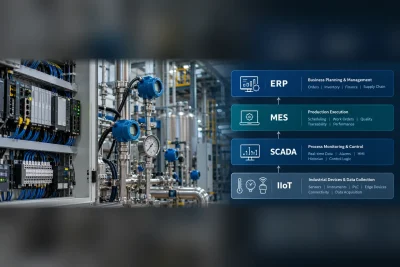
Manufacturing inventory moves through many stages. Materials are received, stored, issued to production, converted into finished goods, and finally dispatched. Keeping stock figures accurate matters, but manufacturers also need to know where materials are and how they move.
At DD Automation, we help businesses connect inventory activities with technologies such as barcode, RFID, mobile computing, and existing business systems. We focus on making inventory information more useful where daily operations happen.
This makes the choice between an ERP inventory module and inventory management software worth examining. The right option depends on the operation’s complexity and the level of control required.
What can an ERP inventory module manage?
An ERP inventory module connects stock information with wider business functions such as procurement, finance, sales, and production. It gives different teams access to a common set of inventory records.
Manufacturers can typically use it for:
- Purchase and receipt records
- Stock quantities and valuation
- Material issues and consumption
- Stock transfers
- Purchase and sales transactions
- Production-related inventory entries
The limitations often appear when teams need detailed information about the physical movement of materials.
When does basic inventory visibility become a problem?
A system may show that material is available without showing the complete operational picture. Warehouse teams may still need to find the correct bin, confirm the material’s status, or check whether part of the stock has already moved to production.
Manual updates can make this problem worse. When transactions are entered after the activity has happened, other teams may work with information that is no longer current.
An inventory management system can provide closer tracking of:
- Storage locations and bins
- Material receipts and put-away
- Internal stock movement
- Production issues and returns
- Work-in-progress
- Finished goods
- Batch and serial information
What does dedicated inventory software bring to the plant?
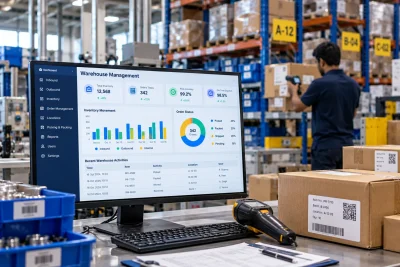
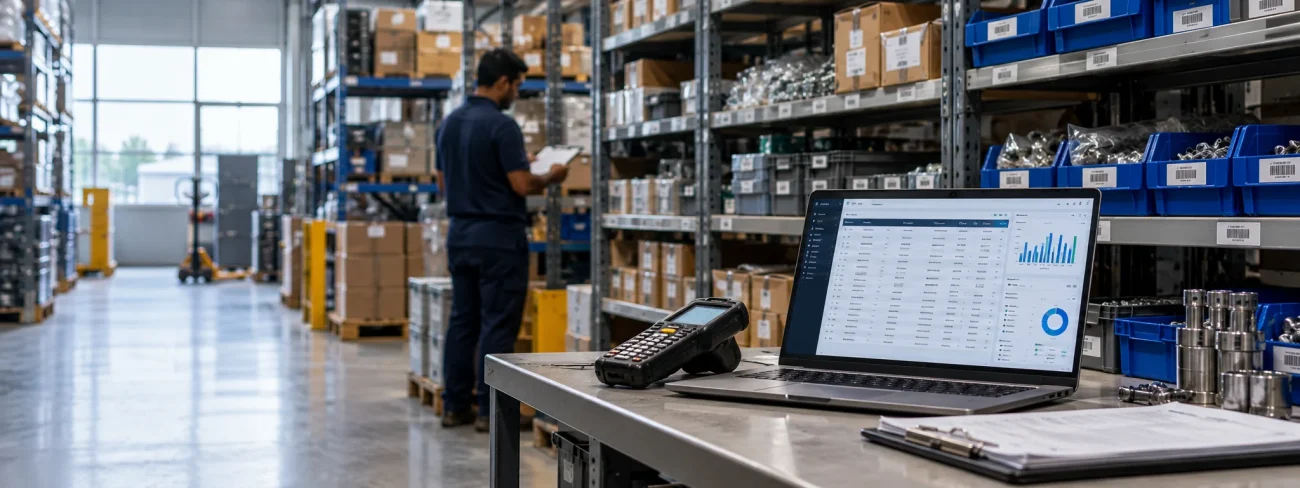
Inventory management software focuses on the operational side of inventory. It lets employees record movements while handling the material, instead of relying on delayed manual entries.
For example, a warehouse operator can scan a material during receiving, assign its location, and update its movement when it is issued to production.
This can support activities across the inventory cycle:
| Stage | Information Captured |
| Receiving | Item details, quantity and receipt information |
| Storage | Storage location and available stock |
| Movement | Source and destination locations |
| Production | Materials issued or returned |
| WIP | Movement between production stages |
| Finished Goods | Quantity and storage location |
| Picking | Items selected for an order |
| Dispatch | Final quantity and shipment details |
The main benefit is better visibility between the physical movement of stock and the information available in the system.
ERP module or inventory system: how do they differ?
The two systems can work together, but they focus on different things.
| Area | ERP Inventory Module | Inventory Management System |
| Business inventory records | Strong | Strong |
| Finance and valuation | Strong | Usually through integration |
| Warehouse operations | Depends on setup | Stronger operational focus |
| Location tracking | Depends on configuration | Detailed tracking possible |
| Barcode/RFID | May require integration | Supports scanning |
| Shop-floor tracking | May need additional tools | Supports direct tracking |
| Physical stock movement | Transaction-focused | Operationally focused |
| ERP integration | Native | Can be integrated |
An inventory management system becomes more useful when the business needs detailed information about where inventory is and what is happening to it.
When can manufacturers stay with ERP?
Not every manufacturer needs another inventory platform. An ERP module may be suitable when stock processes are simple, and existing records provide enough visibility.
It can work well when:
- There are few storage locations.
- Stock movement is relatively simple.
- Transaction volumes are manageable.
- Manual updates do not cause major discrepancies.
- Detailed WIP tracking is not required.
- Barcode or RFID is not central to the workflow.
The objective should be to solve a real operational problem rather than add unnecessary software.
What indicates a need for dedicated inventory software?
Manufacturers should look more closely at inventory management software when inventory problems repeatedly affect daily work.
Common signs include:
- Frequent differences between physical and system stock
- Heavy dependence on spreadsheets or paper records
- Difficulty locating materials
- Delayed inventory updates
- Lengthy stock-counting activities
- Limited WIP visibility
- Weak material traceability
- Production interruptions caused by unavailable stock
In these situations, an inventory management system can capture information closer to where inventory is handled.
How does supply chain software fit into manufacturing?
Inventory is one part of a much wider material flow. Procurement, receiving, storage, production, order fulfilment, and dispatch all influence whether the right material is available at the right time.
Supply chain software can connect these activities and give teams a broader view of material movement.
It can cover areas such as:
- Procurement and supplier activity
- Material receiving
- Warehouse operations
- Inventory availability
- Production requirements
- Order fulfilment
- Picking and packing
- Dispatch
This becomes particularly useful when inventory problems are connected to delays or gaps elsewhere in the supply chain.
When should manufacturers consider supply chain management software?
Supply chain management software becomes more valuable as operations grow more complex. Multiple plants, warehouses, suppliers, product lines, and distribution points can make disconnected processes difficult to manage.
A connected approach can help teams determine:
- Whether required materials have been received
- Where materials are currently stored
- What has been issued to production
- Whether enough stock is available
- Which finished goods are ready for dispatch
- Where delays are occurring
Manufacturers can use supply chain management software to complement their ERP and inventory systems, rather than replacing them.
Should you replace the ERP or integrate with it?
Manufacturers should first identify what their existing ERP already handles effectively. If finance, procurement, sales, and core inventory records are functioning properly, an entire ERP replacement might not be needed.
An inventory management system can be integrated with the existing ERP to handle activities such as scanning, location tracking, and physical stock movement. Supply chain software can similarly connect procurement, inventory, production, and distribution processes.
This lets businesses address specific operational gaps without rebuilding their entire technology environment.
Choosing the right approach for your plant
The right inventory setup depends on how materials move through your plant and where your current system falls short. An ERP inventory module may be enough for simple operations, while manufacturers dealing with frequent movement, multiple locations, barcode scanning, WIP, or traceability may need a dedicated inventory management system.
At DD automation, we help manufacturers connect inventory and supply chain activities with practical automation technologies. We use inventory management software, supply chain management software, barcode, RFID, mobile computing, and system integration to help businesses improve visibility without unnecessarily replacing their existing systems.
If manual tracking, stock mismatches, or limited material visibility are affecting your operations, speak with us to find an inventory approach that fits your existing systems and manufacturing requirements.