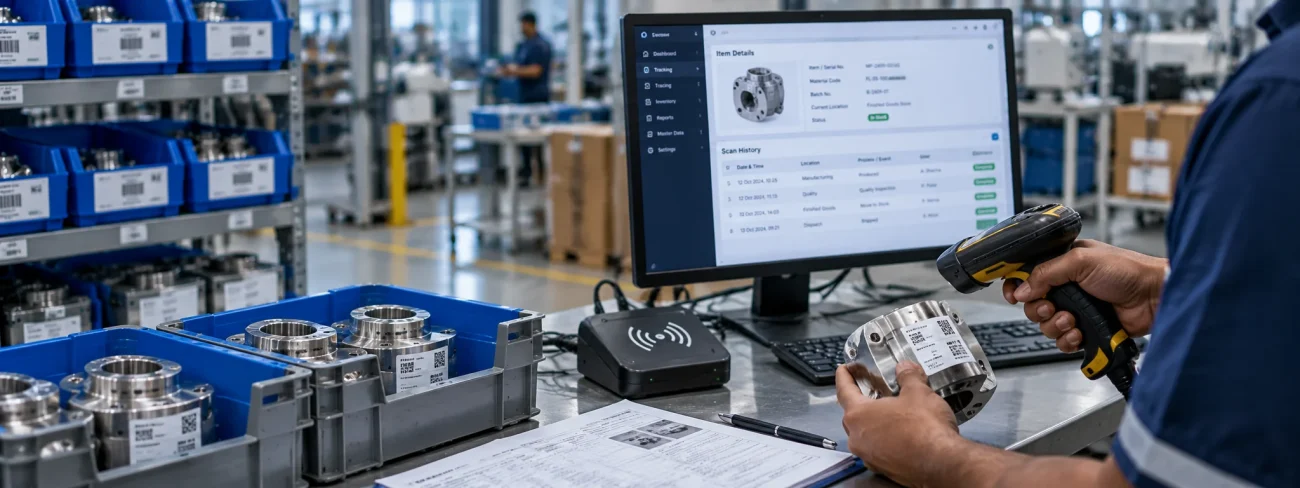
Manufacturing and logistics operations move materials, products, equipment, and finished goods across several stages. Knowing where an item is at a given time is useful, but businesses also need to know where it came from and what happened to it along the way. This is where tracking and tracing become important.
At DD automation, we help businesses connect identification technologies with digital workflows to improve visibility across manufacturing, warehousing, and logistics operations. Our solutions include asset tracking solutions, track and trace software, and a track and trace system designed around different operational requirements.
What is tracking in manufacturing and logistics?
Tracking focuses on an item’s current or forward movement. It helps a business determine where a product, material, shipment, or asset is and what stage it has reached in its journey. In manufacturing, this may involve following raw materials or work-in-progress through different production stages.
Logistics teams use tracking to monitor the flow of goods from dispatch to delivery. Technologies like barcode scanners, RFID tags, GPS devices, and other identification tools record movement at various stages.
Tracking is mainly concerned with questions such as:
- Where is the item now?
- Has it reached the next stage?
- When was it moved?
- Which location currently holds it?
- Has it been dispatched or delivered?
What does tracing mean?
Tracing works in the opposite direction. Instead of only asking where an item is now, it looks at its previous movements, origin, and related records.
For example, if a finished product has a quality issue, tracing can help identify the material batch, supplier, production stage, or previous location associated with that product. This historical view can support quality investigations, audits, recalls, and root-cause analysis.
Tracing can answer questions such as:
- Where did the product or material come from?
- Which batch or lot was used?
- Which production stages did it pass through?
- Where was it stored or transferred?
- Which other products may be connected to the same batch?
Tracking vs tracing: what is the main difference?
The simplest way to understand the difference is to look at the direction of information.
| Factor | Tracking | Tracing |
| Primary Focus | Current and forward movement | Past movement and origin |
| Main Question | Where is it now? | Where did it come from? |
| Information Type | Current status and location | Historical records and journey |
| Common Use | Inventory and shipment visibility | Quality, recalls and investigations |
| Direction | Forward | Backward |
| Key Value | Operational visibility | Product and process history |
Tracking and tracing are different functions, but they work better when used together. A business may need to know where a shipment is today and later review every event associated with that shipment.
How does tracking work in manufacturing?
Manufacturing includes numerous movement points. Raw materials arrive at the facility, components are transferred between workstations, products are inspected, and finished goods are ultimately stored or shipped.
A structured tracking process can assign a unique identity to a product, batch, component, or asset. Each scan or identification event then updates its location or status.
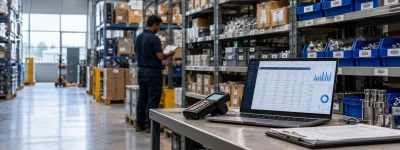
Asset tracking software can help organisations record the movement of equipment, tools, pallets, containers, and other reusable assets. When barcode or RFID identification is connected to digital records, teams can reduce dependence on manual registers and gain better visibility across locations.
For businesses managing a large number of physical assets, asset management software can also bring asset details, assignments, locations, and movement records into a central system.
How does tracing support quality and compliance?
Tracing becomes especially useful when a business needs to investigate something that has already happened. A production issue, customer complaint, failed inspection, or product recall may require teams to look back through several stages of the product lifecycle.
A track and trace software solution links identification records with production and movement data, enabling teams to quickly access information about specific products, batches, or serial numbers without sifting through paper records or spreadsheets.
Tracing can support:
- Batch and lot investigations
- Product recall activities
- Quality checks
- Supplier verification
- Production history reviews
- Audit preparation
- Root-cause investigations
Why are both tracking and tracing essential for businesses?
Tracking can show a warehouse team the location of a product, but it doesn’t reveal why it got there or what earlier processes were involved. Tracing fills in this missing historical context.
Together, both functions offer a more comprehensive view of an item’s journey. A track and trace system can log movement events from production and storage to dispatch and distribution, depending on the workflow managed.
This is especially helpful when products move through various facilities, warehouses, suppliers, or distribution centres. Teams can review the historical data to identify issues and base their decisions on recorded information instead of assumptions.
How are asset tracking and product tracing different?
Asset tracking and product traceability may look similar, but their objectives can differ.
Asset tracking generally focuses on reusable business assets such as equipment, tools, pallets, containers, and mobile devices. Product tracing focuses more on the history of materials, components, batches, or finished products.
For example, asset management software may help a company identify which department has a particular tool and when it was moved. Product traceability may instead show which raw material batch was used to manufacture a finished product.
This distinction helps businesses choose technology based on what they actually need to monitor.
What technologies support tracking and tracing?
The technology used depends on the item type, operating environment, required accuracy, and movement frequency.
Common technologies include:
- Barcodes: Useful for structured identification and scan-based transactions.
- RFID: Enables identification without requiring every item to be manually aligned with a scanner.
- GPS: Suitable for tracking vehicles, shipments, and assets across larger geographic areas.
- Mobile Devices: Help employees capture movement and transaction data at different operational points.
- IoT Sensors: Can add condition or location data to connected assets and goods.
The important factor is not simply choosing a technology. The identification method must fit the business process, and the information teams need to capture.
When should businesses use a track and trace solution?
Businesses should consider a track and trace approach when products, materials, or assets move through several operational stages and accurate records matter.
Asset tracking solutions can help organisations better control equipment and reusable assets. Similarly, track and trace software can support product and material visibility when businesses need to record movement and retrieve historical information.
The right approach will depend on the number of items, locations, movement frequency, identification methods, and existing software systems.
Building better visibility across operations
Tracking tells businesses what is happening with an item as it moves through an operation, while tracing helps explain its history. Neither function has to work independently. When connected through a suitable digital system, they can provide a clearer view of materials, products, assets, and their movements.
DD automation helps businesses connect barcode, RFID, software, and operational workflows to build practical visibility across manufacturing and logistics. Our asset tracking solutions, asset tracking software, and track and trace system capabilities can be aligned with different requirements, from asset movement to product-level traceability.
If your organisation needs better visibility into where assets or products are and how they moved through your operations, speak with our team to explore the right tracking and tracing approach for your workflow.