
Introduction
For decades, supply chains were designed to move products efficiently from one point to another. Success was measured by speed, cost, and inventory availability.
But today, the definition of an effective supply chain is changing.
Movement alone is no longer enough.
Organizations now need visibility into how products, materials, and documents move — not just where they are.
Transparency is emerging as the next foundational layer of modern operations.
Across manufacturing, warehousing, logistics, and enterprise environments, businesses are shifting from simply managing inventory to understanding its journey.
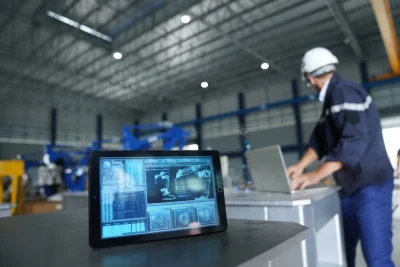
This shift is driving the adoption of integrated industrial automation solutions that enable real-time capture, tracking, and coordination across operational processes.
From Movement to Visibility
Traditional supply chains relied heavily on periodic updates and manual inputs. Inventory levels were reviewed through reports, and document movement was tracked through registers or spreadsheets.
While this worked in stable environments, modern operations are far more dynamic.
Multi-location warehouses, distributed teams, and complex production networks require systems that go beyond recording activity — they must provide live visibility.
Technologies such as RFID tracking systems, industrial mobile terminals, and Android mobile computers are transforming operational execution.
Rather than waiting for updates, organizations are capturing movement at the point of action — enabling a shift from delayed insight to real-time awareness.
Transparency as an Operational Layer
Transparency is often misunderstood as a reporting function.
In reality, it is an execution capability.
When embedded into process automation solutions, transparency allows organizations to:
• Monitor workflows as they occur
• Reduce dependency on manual intervention
• Improve operational consistency
In warehouse automation solutions, this means:
• Knowing exactly when goods are received
• Tracking internal movement without manual logs
• Validating dispatch events in real time
In administrative environments, document tracking system platforms ensure that physical files remain traceable throughout their lifecycle.
Transparency moves from being a visibility tool to becoming an operational discipline.
The Role of Connected Devices
Transparency begins at the point of action.
For visibility to be meaningful, operational data must be captured as activities occur — not recorded later through manual updates or delayed system entries.
Connected devices enable real-time capture of movement, handling, and workflow execution directly from the field. Each operational action — whether it is receiving goods, transferring materials, or moving documents — becomes a live data point rather than a retrospective update.
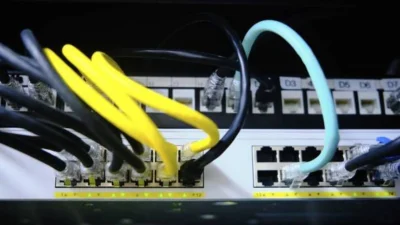
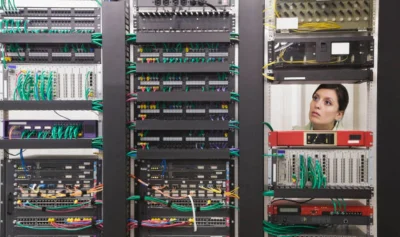
When integrated through strong enterprise networking solutions, this data flows instantly into warehouse automation and process systems, ensuring that physical operations are reflected in digital environments without delay.
This real-time synchronization improves coordination, reduces reliance on manual reconciliation, and strengthens process consistency.
By embedding data capture into execution itself, connected devices bridge the gap between physical operations and digital oversight — making transparency an operational capability rather than a reporting function.
Beyond Inventory: Expanding the Scope
Transparency is no longer limited to finished goods.
It now extends across:
• Raw material movement
• Work-in-progress tracking
• Equipment utilization
• Document flow
Through industrial IoT solutions, assets and environments can be monitored continuously.
In smart warehouse solutions, this allows managers to identify bottlenecks early, improve resource allocation, and enhance operational coordination.
Building Integrated Systems
Transparency cannot be delivered through standalone technologies.
It requires integrated end to end automation solutions that connect:
• Data capture
• Network infrastructure
• Processing systems
Operational transparency is achieved when capture mechanisms, connected devices, enterprise networking, and workflow-driven automation platforms function as a unified system.
Movement events captured at source, transmitted over reliable networks, and processed within warehouse automation environments enable a continuous, real-time flow of operational data.
This system-level integration converts fragmented tracking into synchronized visibility.
Strengthening Operational Confidence
Transparent operations reduce dependency on assumptions and manual confirmations.
In environments such as logistics hubs or manufacturing plants, transparency enables:
• Faster decision-making
• Improved accountability
• Reduced operational uncertainty
By embedding transparency into process automation solutions, organizations enhance both accuracy and responsiveness.
Supporting Scalable Operations
As businesses grow, operational complexity increases.
Integrated industrial automation solutions ensure that transparency remains consistent across locations.
Smart warehouse solutions powered by connected devices and industrial IoT solutions enable organizations to maintain visibility even as operations expand.
Enabling Data-Driven Execution
Transparency transforms operational data into actionable insight.
When movement is captured consistently through RFID tracking systems and industrial mobile terminals and supported by warehouse automation software, organizations gain access to real-time operational intelligence.
This allows them to optimize workflows, improve coordination, and enhance process reliability.
The Emerging Foundation
Supply chains are transitioning from:
• Managed → Observable
• Recorded → Verified
• Reactive → Insight-driven
Modern industrial automation deployments are designed to support this transition through the integration of industrial IoT solutions, smart warehouse solutions, and document tracking system platforms.
Transparency is becoming the structural layer upon which modern supply chains operate.